Balanced review
Is Kling AI good or bad? What the trade-offs show
Is Kling AI good or bad? The answer depends on what you need from an AI video workflow. Kling AI can be useful for visual experimentation, but its value changes with your expectations, prompt quality, and tolerance for revisions.
how it used to be done
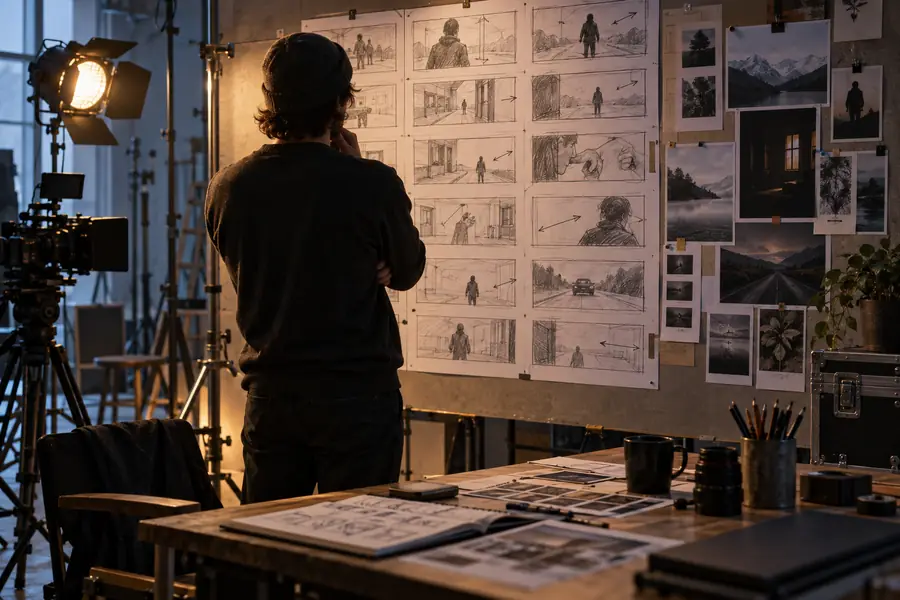
Before generative video tools, creating a short visual sequence usually required a camera, editing software, stock footage, or a larger production team.
how it is done today
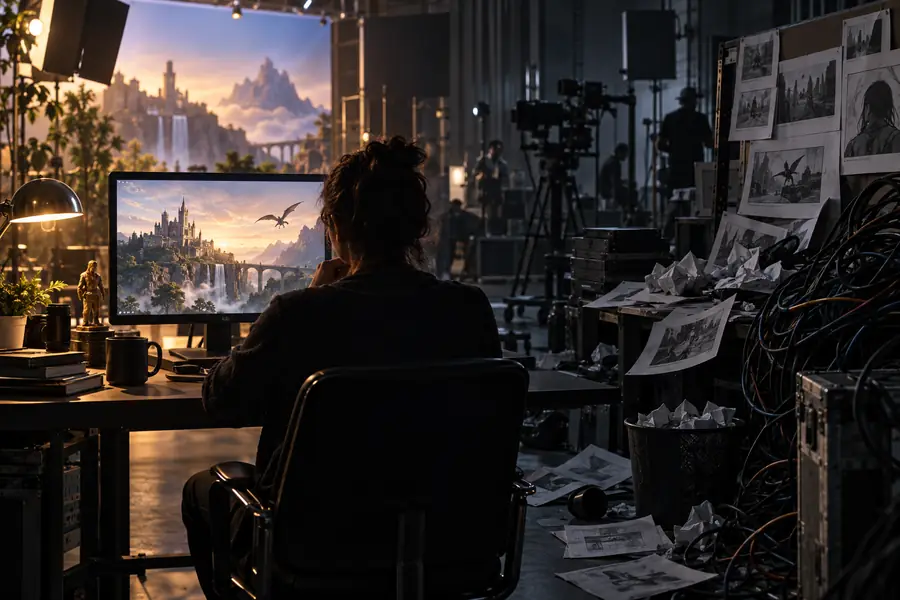
A modern AI video workflow compresses early production into a prompt, a reference image, and a series of review decisions.
-
1
Describe the shot
Write the subject, action, setting, camera movement, lighting, and visual mood in one focused prompt.
-
2
Generate and inspect
Create a short result, then check motion, anatomy, continuity, framing, and whether the scene follows the intended action.
-
3
Refine the direction
Change one variable at a time, such as camera movement or subject action, instead of rewriting every detail at once.
what changed
The biggest change is not that every result is perfect. It is that a single creator can test visual ideas before committing to a conventional production process.
- Earlier workflow
- AI-assisted workflow
The tool speeds up iteration, not judgment.
who switched
Different users see different value in Kling AI. It is most helpful when the goal is exploration, previsualization, or short-form visual content rather than guaranteed production-ready footage.
- 1 Creative exploration becomes faster to test
- 01 lens
- 2 Motion and continuity still need human review
- 02 checks
- 3 Text prompts and image references support different starting points
- 03 paths
- 4 Quality depends on the brief, subject, motion, and revisions
- 04 factors
A practical comparison
The table below separates the appeal of Kling AI from the limits that can make it feel disappointing. Neither side is universal; the better choice depends on the job.
Kling AI
Conventional video workflow
Starting point
Kling AI
Text prompts or visual references
Conventional video workflow
A filmed scene, animation plan, or stock asset
Early concept speed
Kling AI
Strong for testing several visual directions
Conventional video workflow
Usually slower before a usable shot exists
Control over exact details
Kling AI
Can vary between generations and revisions
Conventional video workflow
More direct control during filming or editing
Physical realism
Kling AI
Can produce convincing motion but may show artifacts
Conventional video workflow
Depends on capture, animation, and post-production quality
Best use
Kling AI
Mood tests, concept clips, social experiments, and previsualization
Conventional video workflow
Final campaigns, repeatable scenes, and exact performances
Main risk
Kling AI
Inconsistent characters, objects, hands, or movement
Conventional video workflow
Higher time, equipment, coordination, or editing demands
Human involvement
Kling AI
Prompting, selection, refinement, and cleanup remain important
Conventional video workflow
Planning, capture, direction, and editing remain important
Overall judgment
Kling AI
Good when speed and experimentation matter
Conventional video workflow
Better when precision and repeatability matter
its own FAQ
A short answer to the central question: Kling AI is neither simply good nor simply bad. It is a capable but imperfect creative tool whose results should be judged against the intended use.
Kling AI can be good for exploring video concepts, creating short visual experiments, and turning an idea into a draft quickly. It can be frustrating when you need exact continuity, consistent characters, precise motion, or dependable final footage without multiple revisions.
It can be approachable for beginners because a plain-language description is enough to start testing an idea. Beginners still need to learn how to describe motion, review artifacts, and refine prompts rather than expecting every first generation to be usable.
Kling AI may help professionals with mood boards, previsualization, pitch concepts, and selected short-form assets. Whether it is suitable for final delivery depends on the required consistency, resolution, rights review, and the amount of correction the project allows.
Unwanted motion, changing details, weak prompt interpretation, and inconsistent results can make the experience feel unreliable. The gap between an impressive demonstration and a repeatable production workflow is often the main source of disappointment.