Solo video creator
Build short visual inserts for explainers, commentary, or weekly updates when original footage is limited.
Add atmosphere and pacing without scheduling a full location shoot.
kling ai promptsChannel workflow
Use youtube kling ai examples as production references, not as a promise of one-click publishing. This guide shows how to shape ideas, generate supporting shots, and prepare clips for a consistent YouTube format.
The strongest channel workflows assign Kling AI a specific job instead of asking it to replace the entire editorial process.
Build short visual inserts for explainers, commentary, or weekly updates when original footage is limited.
Add atmosphere and pacing without scheduling a full location shoot.
kling ai promptsGenerate scene concepts and supporting motion for narrated stories, lists, and educational videos.
Turn a script outline into a visual shot list that is easier to edit.
kling ai text to video generatorTest a strong opening image, action beat, or visual transition before committing to a longer edit.
Create multiple hook directions and select the one that supports the title and thumbnail.
kling ai image to video generatorExplore product mood, campaign concepts, and controlled visual variations for internal review.
Give stakeholders tangible references before filming or commissioning final assets.
kling ai motion controlDevelop visual responses, reaction backgrounds, or companion clips around audience questions and discussions.
Publish more relevant context while keeping the creator’s own commentary central.
kling ai redditTreat generated footage as a modular production ingredient: define the editorial purpose first, then generate only the shots that earn space in the final cut.
Write the video’s promise, audience, and key moments before opening the generator. Mark where a generated shot clarifies, illustrates, or refreshes the narration.
Describe subject, action, camera movement, setting, duration, and visual tone. Make several focused versions rather than changing every variable at once.
Trim the useful seconds, match the clip to voiceover and music, then check continuity, rights, disclosures, and factual claims before uploading.
Use these companion pages when your channel workflow needs a different input, output, or publishing context.
A useful YouTube workflow balances visual quality with editorial control. The comparison below separates a practical generated asset from a finished channel video.
Kling AI production asset
YouTube-ready video
Kling AI production asset
Create a scene, insert, transition, or visual reference
YouTube-ready video
Deliver a clear idea for a defined audience
Kling AI production asset
Usually supplied by the creator’s script and edit
YouTube-ready video
Must connect to the title, narration, pacing, and payoff
Kling AI production asset
May need separate voiceover, music, and sound design
YouTube-ready video
Balanced audio supports comprehension on phones and desktops
Kling AI production asset
Characters, objects, and motion may vary between generations
YouTube-ready video
Shots are selected and ordered to feel intentional
Kling AI production asset
Visual output can be suggestive rather than documentary
YouTube-ready video
Claims, labels, demonstrations, and sources require human review
Kling AI production asset
Prompt-led style can drift across clips
YouTube-ready video
A repeatable palette, framing rule, and edit treatment create cohesion
Kling AI production asset
A draft asset for review and editing
YouTube-ready video
A packaged upload with title, description, thumbnail, captions, and disclosure checks
The before-and-after distinction is simple: a generated frame is only valuable when the edit gives it a clear job and the viewer understands why it is there.
The second image represents editorial treatment, not an automatic export result.

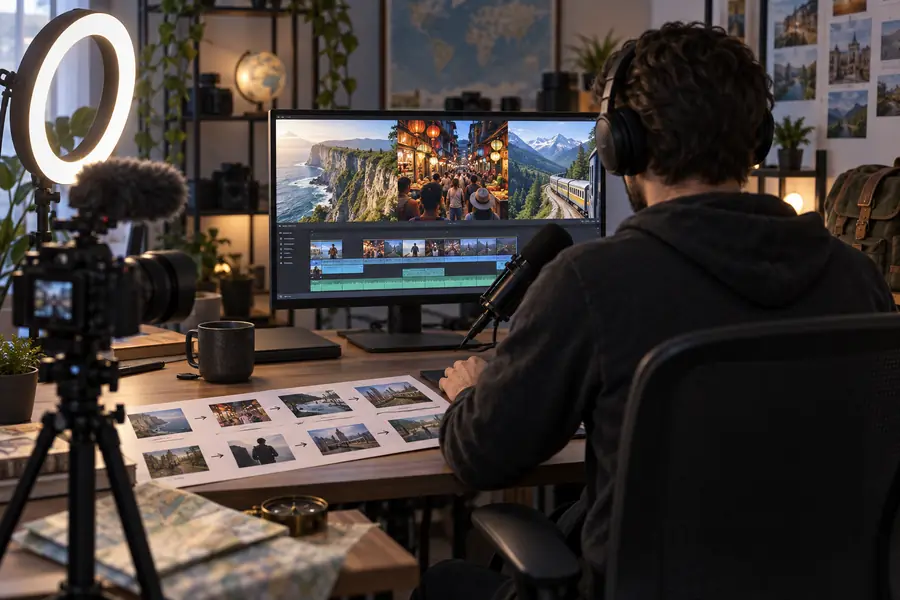
Generated footage can accelerate ideation, but it does not remove the decisions that make a channel trustworthy and watchable.
A visually impressive clip does not decide the audience, promise, structure, or publishing cadence.
WorkaroundStart with a brief that names the viewer, topic, takeaway, and role of every generated shot.
Faces, hands, props, logos, and environments may shift between clips or attempts.
WorkaroundKeep shots short, use reference material where available, and cut around unstable details.
A realistic-looking scene can still misrepresent a place, event, product, or scientific process.
WorkaroundUse original sources, label illustrative sequences, and have a person check every factual passage.
Editing, captions, audio mixing, thumbnails, metadata, rights review, and disclosures remain separate tasks.
WorkaroundUse a final publishing checklist and treat generated footage as one reviewed asset in the timeline.
These answers address the most common questions around examples for YouTube and the difference between AI-assisted production and the platform itself.
Look for examples that show a clear production purpose, such as an opening shot, explainer visual, transition, or background sequence. Evaluate the prompt, movement, edit, and viewer context rather than judging an isolated clip.
It can help create video assets that may be edited into a YouTube production. You still need to shape the story, add or review audio, check continuity, handle captions and metadata, and confirm that the final upload meets your channel standards.
They serve different roles, so a direct winner is misleading. Kling AI is a generation tool for creating visual material, while YouTube is the publishing and audience platform; many creators can use both in sequence.
Potentially, but eligibility depends on the final content, originality, platform rules, and any applicable rights or disclosure requirements. Review the current terms and make sure the finished video adds meaningful commentary, editing, or educational value.
Copy the workflow principle rather than the exact scene: a focused prompt, a clear editorial purpose, deliberate editing, and a review step. A repeatable process is more useful than a single striking demonstration.