Concept designer
Turn a short visual idea into a moving mood reference for a pitch or storyboard.
You get a quick direction test before investing time in a polished sequence.
kling ai examples redditFree access guide
Use this guide to test video generation without guessing about access, credits, outputs, or common restrictions. Begin with a focused prompt and compare the result with your original idea.
Before you begin
A smooth first attempt depends more on preparation than on a complicated workflow. Have a concise idea, a usable source image if needed, and realistic expectations about generation limits.
Set expectations
Free access is useful for testing ideas, but it is not the same as unlimited production access. These are the friction points most likely to affect a first session.
Several prompt attempts can use available credits quickly, especially when each version changes camera movement, subject action, and style.
WorkaroundChange one variable at a time and save the strongest prompt before trying another version.
Crowded scenes, fast choreography, and several interacting subjects may produce inconsistent motion or object changes.
WorkaroundUse shorter actions, one main subject, and explicit camera direction.
A free generation may need retries for continuity, hands, faces, text, or fine motion details.
WorkaroundTreat early clips as visual tests and refine the prompt from the observed mistake.
Availability, queues, output settings, and credit policies may differ as the service updates.
WorkaroundCheck the current interface before planning a large batch of clips.
The basic workflow
The free workflow is easiest to manage when the idea, motion, and review stages stay separate. This keeps each generation purposeful instead of turning the session into random trial and error.
Write the subject, setting, action, mood, and camera movement in one compact sentence. Avoid combining several unrelated scenes.
Start with text for a new concept or use one clear image when composition and subject appearance matter more than invention.
Watch for motion, framing, subject consistency, and unwanted details. Keep what works, then revise only the weakest instruction.
Visual checkpoint
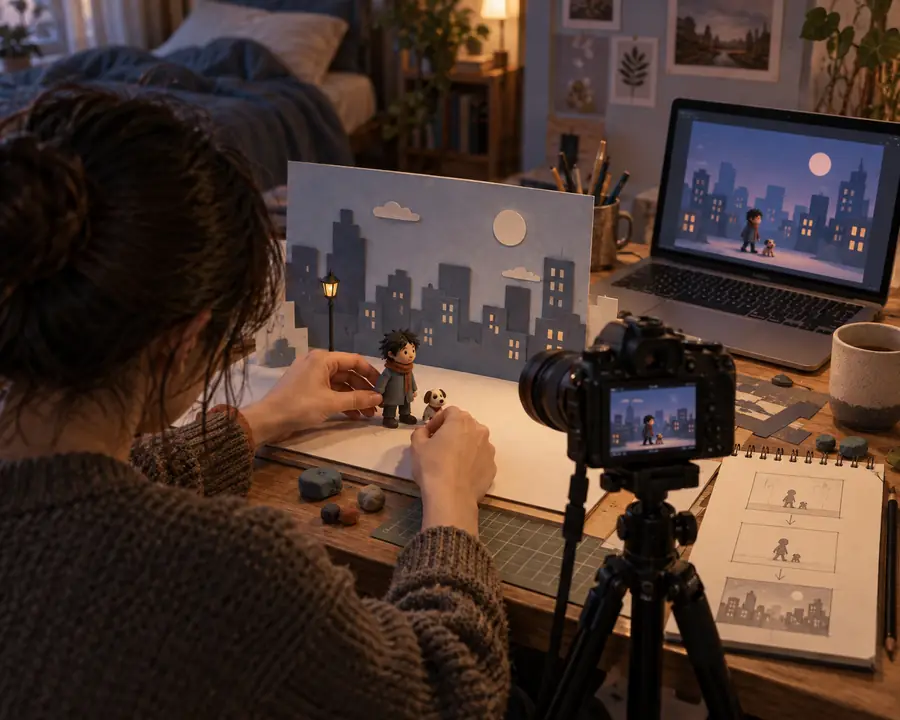
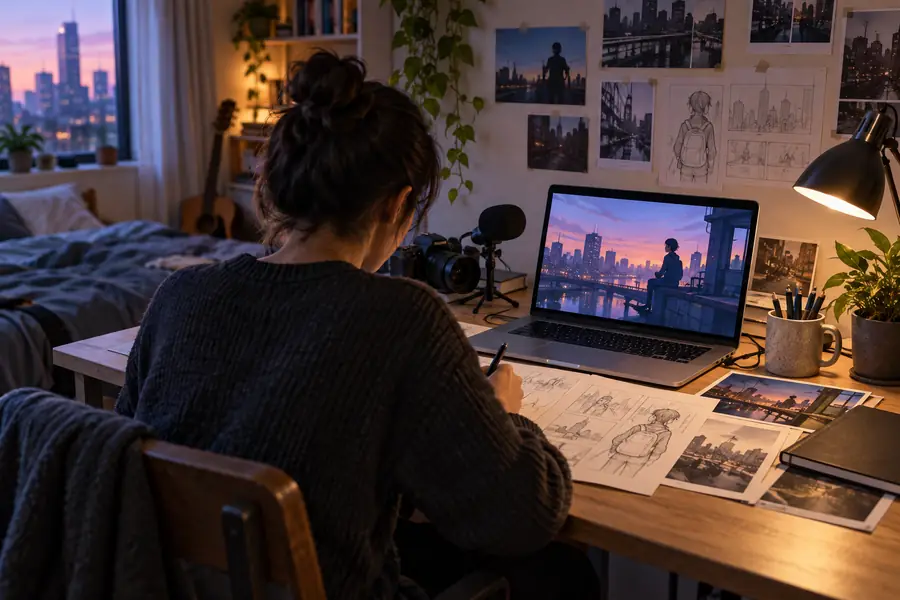
The difference between a vague request and a directed prompt is visible before any advanced settings are involved.
The second version adds subject action, camera movement, and atmosphere instead of relying on a broad style label.
Quick reference
These numbers describe the recommended process on this page, not a promise of permanent service limits.
Practical starting points
The same free workflow can support several goals, but each goal benefits from a different starting choice and review standard.
Turn a short visual idea into a moving mood reference for a pitch or storyboard.
You get a quick direction test before investing time in a polished sequence.
kling ai examples redditBuild a brief atmospheric clip from a direct text prompt for a social post or intro.
A narrow subject and simple motion make the first result easier to judge.
kling ai promptsAnimate a still image while preserving its main composition and visual identity.
A single source image gives the generation a clearer visual starting point.
kling ai image to video generatorCompare two prompt versions to learn which wording changes movement or framing.
A small controlled experiment teaches more than spending credits on unrelated ideas.
how to use kling ai for freeAccess comparison
Use this comparison to decide whether a small experiment is enough for your goal or whether you need more room for iteration.
Free route
Broader access
Free route
Testing a concept or learning the workflow
Broader access
Developing a repeatable video workflow
Free route
No payment required to begin where free access is available
Broader access
May involve a paid option depending on current terms
Free route
Limited by available credits, queues, or current rules
Broader access
Typically offers more room for repeated attempts
Free route
Keep each attempt focused and economical
Broader access
Explore more variations and refinements
Free route
Expect to select from a small number of tests
Broader access
More attempts can support tighter iteration
Free route
Policies and availability should be checked before a project
Broader access
A selected plan may offer clearer operating expectations
Free route
Write one prompt and inspect the first result
Broader access
Build a repeatable brief, prompt library, and review process
Common questions
Answers to the questions people most often ask before trying the free route.
Kling AI can be available through a free access route, but free use is generally subject to current credits, queues, features, and service rules. Check the live interface before assuming that every model, setting, or output option is included.
You may be able to begin without payment when free access is offered in your region and account flow. The practical limit is usually how much generation activity is available, so plan a small test rather than an unlimited batch.
No single free route should be assumed to include every model, duration, resolution, or editing control. Feature availability can change, so confirm the options shown at the time you generate.
It can help with concept tests, short experiments, and early visual references. For a finished project, allow time to review consistency, retry weak shots, and verify the current output and usage terms before publishing.